
Überdruck3D Dechandt & Habermann GbR
TECHNOLOGIES & MATERIALS
Überdruck3D – Your Partner for Additive Manufacturing, Series Components, and Creative Large-Scale Projects
Überdruck3D advises you with a process- and application-oriented approach: we select the 3D printing technology, material, and possible post-processing to match the function, quantity, geometry, build volume, surface requirements, and budget of your project. Our additive manufacturing processes include FDM, SLA, SLS, and MJF.
Request a projectAdditive Manufacturing – Diverse Technologies and a Wide Material Selection
Additive manufacturing offers several manufacturing processes, each with its own strengths. A technical spare part needs different properties than an architectural model, and a small batch needs different processes than a large-format sculpture.
Based on your requirements, we recommend the right manufacturing technology and the suitable material.
Discover Services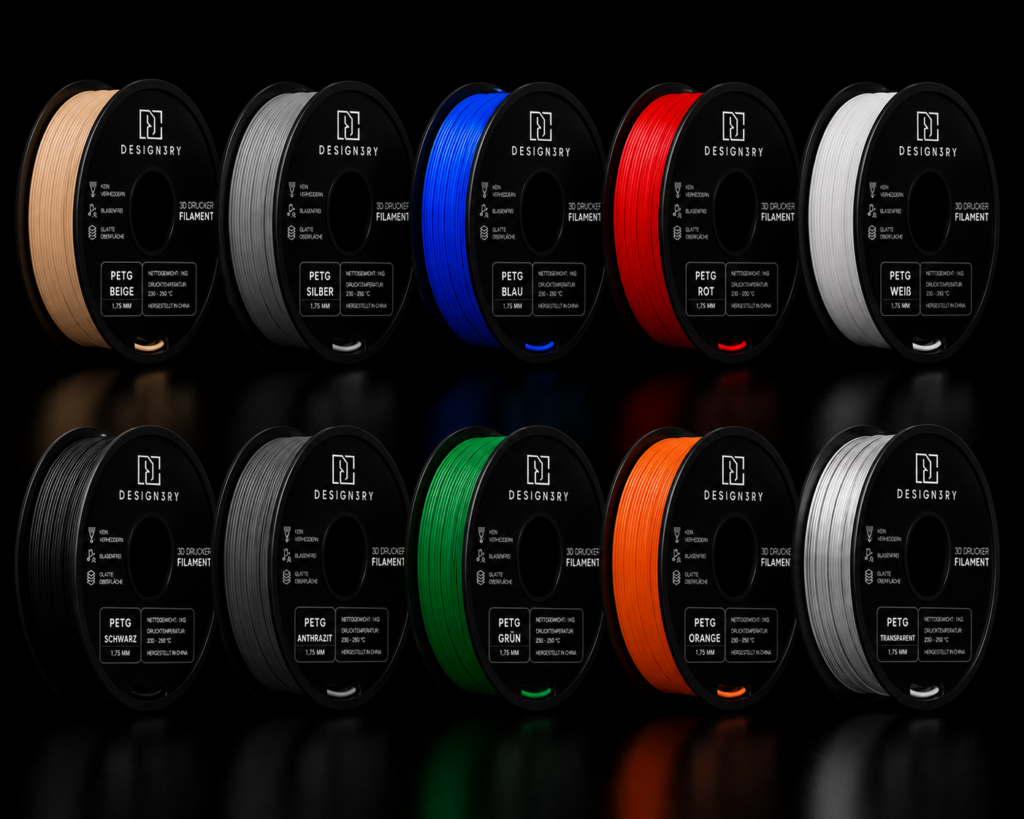
FDM – Flexible for Functional Components, Prototypes, and Large Format
FDM stands for Fused Deposition Modeling. In this process, a thermoplastic is deposited layer by layer. FDM is especially suited for functional prototypes, technical components, fixtures, housings, spare parts, large-format objects, and cost-effective small batches.
The process offers high flexibility in material selection, component size, and adjustments. Especially for individual one-off parts, recurring functional components, or creative large-scale projects, FDM can be a cost-effective solution.
Typical applications:
●
Functional prototypes
●
Brackets, housings, and covers
●
Jigs and tooling aids
●
Spare parts
●
Architectural and presentation models
●
Sculptures, set pieces, and large components
●
Small batches made from thermoplastics
Suitable when: function, size, flexibility, and a cost-effective ratio of effort to quantity are the priority.
SLS – Robust Plastic Components with Complex Geometries
SLS stands for Selective Laser Sintering. Plastic powder is fused layer by layer with a laser. Since the surrounding powder supports the component during printing, complex geometries can often be manufactured without conventional support structures.
SLS is suited to durable, detailed, and functional components. The process is especially interesting for technical components, prototypes with high functional requirements, and small batches.
Typical applications:
●
Functional components and technical parts
●
Housings and complex structures
●
Components with undercuts or internal structures
●
Small batches and recurring series
●
Spare parts and individual components
●
Components with stability and load-bearing requirements
Suitable when: complex geometries, robust properties, and good reproducibility are required.
MJF – Productive Manufacturing for Detailed Functional Components and Series
MJF stands for Multi Jet Fusion. The process is designed for the productive manufacturing of detailed, durable plastic components. It is especially suited to projects with recurring quantities, complex geometries, and requirements for consistent component quality.
MJF can be a suitable solution when a prototype evolves into a small batch or a recurring series process. Technical components with functional requirements can also be realized economically with it.
Typical applications:
●
Small batches and recurring series
●
Functional parts and technical components
●
Housings, brackets, and connecting elements
●
Customized series components
●
Spare parts and on-demand production
●
Complex components with fine details
Suitable when: productivity, repeatability, and durable plastic components are the focus.
SLA – High Detail Accuracy and Fine Surfaces
SLA stands for Stereolithography. In this process, liquid resin is cured layer by layer using light. SLA is especially suited to precise models, fine details, and applications with high surface-quality requirements.
The process is frequently used when design, detail accuracy, and a high-quality visual appearance are more important than the mechanical load capacity of a conventional functional component.
Typical applications:
●
Detailed design models
●
Presentation and visualization models
●
Architectural and product models
●
Prototypes with fine structures
●
Shape, design, and visualization studies
●
Art and exhibition objects with high detail requirements
Suitable when: fine surfaces, precise details, and a high-quality visual effect are required.
Selecting Materials to Match the Application
Material selection isn’t based on a fixed list, but on the requirements of your project. What matters is how the component will be used later and which properties it needs to meet.
Possible criteria include:
●
Mechanical load capacity
●
Stiffness or flexibility
●
Temperature resistance
●
Impact resistance
●
Weight
●
Surface quality
●
Visual appearance and color
●
Suitability for painting or further post-processing
●
Cost-effectiveness at the desired quantity
Depending on the process and requirement, different thermoplastics, powder materials, or resins are used. We advise you on which material properties make sense for your application.
Material Selection for Technical Components
Technical components often need to do more than look good. They need to withstand loads, fit securely, be assembled, and function reliably in their intended environment.
When selecting materials, we therefore check, among other things:
●
Temperature and environmental influences
●
Stiffness or flexibility requirements
●
Tolerances, fits, and connecting elements
●
Possible post-processing or assembly
Given the wide variety of materials, we’re happy to help you make the right choice.
Request Technologies & MaterialsMaterials at a Glance
All common materials for FDM, SLS, MJF, and SLA at a glance – with their key properties.
PLA – Beginner-Friendly and Versatile in FDM Printing
PLA (polylactic acid) is a bio-based thermoplastic with good printability and high dimensional accuracy. It is especially suited to models, display objects, and initial functional prototypes.
Compared to technical plastics, PLA is less heat- and impact-resistant, but offers a smooth surface and a wide range of colors.
Properties:
●
Good dimensional accuracy and detail fidelity
●
Wide range of colors and surfaces
●
Low temperature resistance (approx. 50–60 °C)
●
Rather brittle under impact loads
●
Cost-effective to source and process
Suitable when: appearance, dimensional accuracy, and an affordable entry point are the priority – less so for heavily loaded functional components.
Learn morePETG – Tough and Chemical-Resistant
PETG (polyethylene terephthalate glycol) combines good toughness with chemical resistance and is significantly more impact-resistant than PLA. It can be reliably processed with the FDM method.
Thanks to its moisture and chemical resistance, PETG is a good choice for components in contact with liquids or for outdoor use with moderate UV exposure.
Properties:
●
High impact toughness
●
Good chemical and moisture resistance
●
Temperature resistance up to approx. 70–80 °C
●
Slightly transparent variants available
●
Good weldability and bondability
Suitable when: toughness, resistance, and a robust functional surface are required.
Learn moreABS – Robust and More Heat-Resistant
ABS (acrylonitrile butadiene styrene) is an established technical plastic with good impact toughness and higher temperature resistance than PLA. It is frequently used for housings and mechanically loaded parts.
Processing requires a stable printing temperature and, if necessary, a heated build chamber, since ABS can be prone to warping.
Properties:
●
High impact toughness
●
Temperature resistance up to approx. 85–100 °C
●
Easy to post-process (e.g., sanding, gluing)
●
Tendency to warp during printing
●
Can be solvent-smoothed for a glossy surface
Suitable when: mechanical load capacity and heat resistance matter more than detail fidelity.
Learn moreASA – Weather-Resistant for Outdoor Use
ASA (acrylonitrile styrene acrylate) is similar to ABS in mechanical properties but significantly more UV- and weather-resistant. It is therefore especially suited to outdoor components.
Color fastness and dimensional stability remain largely intact even after extended sun exposure.
Properties:
●
High UV and weather resistance
●
Good impact toughness
●
Temperature resistance up to approx. 90–100 °C
●
Lower tendency to warp than ABS
●
Color-stable in outdoor use
Suitable when: components are used permanently outdoors or under UV exposure.
Learn moreTPU – Flexible and Abrasion-Resistant
TPU (thermoplastic polyurethane) is an elastic material with high flexibility, good abrasion resistance, and rebound. It is processed using FDM and MJF.
TPU is suited to seals, damping elements, grippers, and any components that must permanently withstand bending or impact loads.
Properties:
●
High flexibility and elasticity
●
Good abrasion resistance
●
Good rebound after deformation
●
Various hardness grades (Shore A) available
●
Good adhesion to rigid parts
Suitable when: elasticity, damping, or sealing function are required.
Learn morePA12 (Nylon) – Durable and Chemical-Resistant
PA12 is a technical polyamide processed via SLS and MJF into robust, fine-grained components. It combines high toughness with good chemical resistance.
PA12 components can be printed without support structures and are suited to functional end-use parts with complex geometry.
Properties:
●
High toughness and impact resistance
●
Good chemical and oil resistance
●
Fine, uniform surface texture
●
No support structures needed
●
Temperature resistance up to approx. 150–170 °C
Suitable when: durable, functional end-use parts with complex geometry are needed.
Learn morePA12-GF – Glass-Fiber Reinforced for High Stiffness
PA12-GF is a glass-fiber-reinforced polyamide that significantly increases stiffness and dimensional stability compared to standard PA12. It is processed via SLS and MJF.
The glass fiber reinforcement reduces deformation under load and increases heat deflection temperature – at the cost of somewhat more brittle fracture behavior.
Properties:
●
High stiffness and dimensional stability
●
Higher heat deflection temperature
●
Lower toughness than PA12 (more brittle)
●
Good dimensional accuracy under load
●
Suitable for rigid structural components
Suitable when: high stiffness and dimensional stability under load matter more than maximum toughness.
Learn moreSLA Resin – High Detail Accuracy and Smooth Surface
Photopolymer resins are cured layer by layer in the SLA process, enabling especially fine details and smooth surfaces. Depending on the formulation, standard, tough, and flexible variants are available.
Tough resins are similar to ABS in mechanical properties and are suited to more robust functional prototypes, while standard resins are mainly used for visual and display models.
Properties:
●
Very high detail accuracy and surface quality
●
Smooth, paintable surfaces
●
Tough variants with higher impact resistance
●
Limited UV and long-term stability
●
Wide range of colors and transparency
Suitable when: the finest details, smooth surfaces, or visual display models are the priority.
Learn more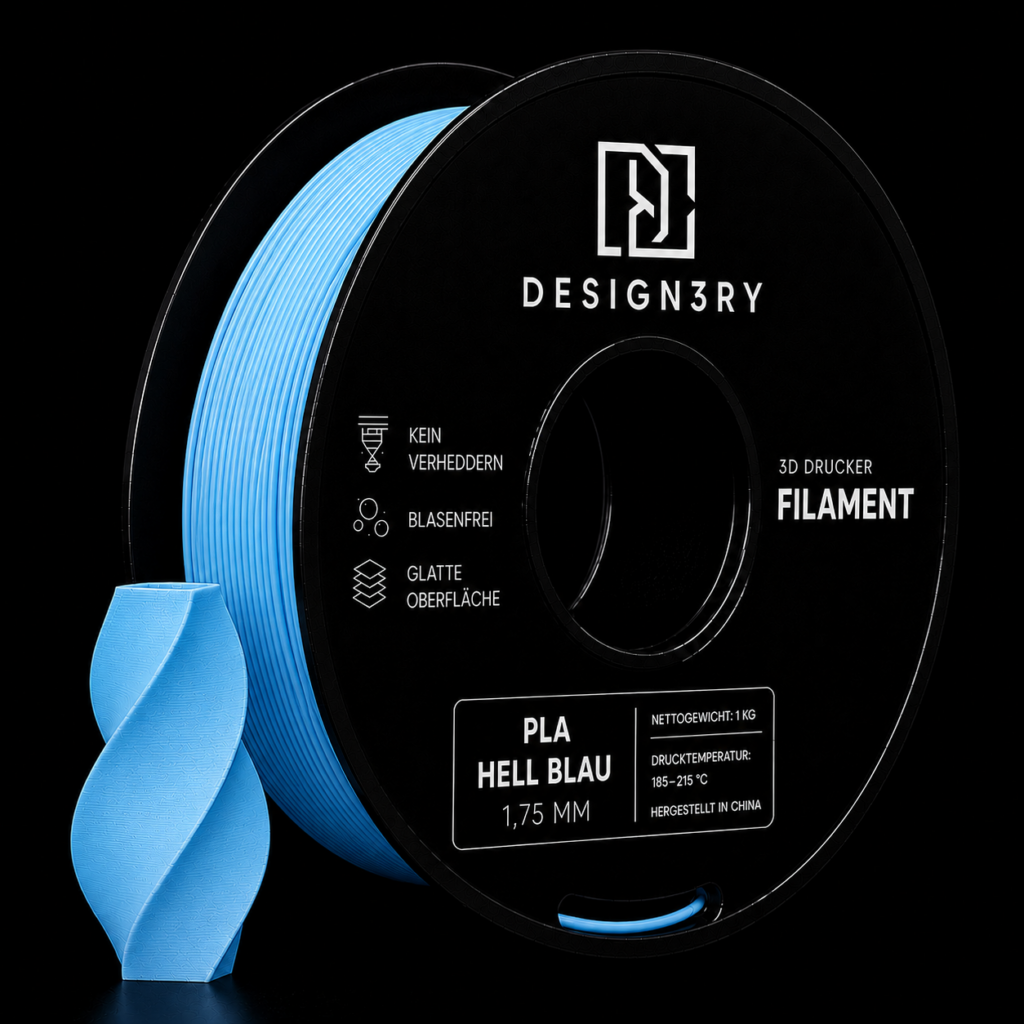
Technology and Material Consulting for Your Project
You don’t need to already know which process or material you need. Send us your CAD file, drawing, sketch, sample part, or project description. Together we’ll clarify the requirements and develop a suitable manufacturing strategy. Whether a one-off part, functional prototype, spare part, small batch, series component, architectural model, or large-format creative project: we’ll advise you on technology, material, design, and finish.